Hair loss isn't just a cosmetic issue; it genuinely impacts self-confidence and psychological well-being. Many men seek treatments and solutions for hair loss and hair thickening from the first days they notice thinning and receding hair, but most waste their time on folk remedies and ineffective products. Complete honesty is far more valuable than any exaggerated promises.
What distinguishes the First Specialist Medical Clinics Complex is that its dermatology clinic deals with this condition with a clear medical methodology: accurate diagnosis first, followed by a detailed treatment plan tailored to the specific cause of hair loss in each man. The right solution always begins with a correct understanding of the problem.
What is the treatment for hair loss in men?
Treating hair loss and thickening hair in men is not a one-size-fits-all solution. The truth is that the treatment is determined by the cause of the hair loss, its duration, and the extent to which the hair follicles respond to stimuli. A man suffering from hereditary hair loss will require a completely different treatment than one experiencing hair loss due to nutritional deficiencies or hormonal imbalances.
The truth is that the concept of "intensification" has multiple dimensions—it includes promoting new hair growth in affected areas, strengthening existing hair, and slowing the rate of ongoing hair loss. These three combined goals are what modern treatment protocols strive for , and they are what the dermatology clinic at the First Specialist Medical Complex offers within a comprehensive and integrated plan.
Hair loss treatment medications
There are medically proven medications for this condition, and their effectiveness has been demonstrated through extensive clinical studies. These are the most prominent:
Topical minoxidil
It stimulates blood flow to the hair follicles and prolongs the growth phase, and is used twice daily on the scalp.
Oral finasteride
It works by inhibiting the enzyme that converts testosterone to DHT, the hormone primarily responsible for hereditary baldness.
Platelet-rich plasma (PRP) injections
It is extracted from the patient's own blood and injected into the scalp to stimulate stem cells in the follicles.
mesotherapy
Direct injections into the scalp carry a mixture of vitamins, minerals and plant hormones to revitalize the follicles.
Low-power laser
It stimulates hair cells with a specific light frequency without pain or side effects.
Dutasteride tablets
It is a stronger option than finasteride in some cases, and is used under close medical supervision.
Important warning: You should not choose between these medications without consulting a specialist doctor, as some of them cause side effects if used without proper guidance.
How is hair loss diagnosed?
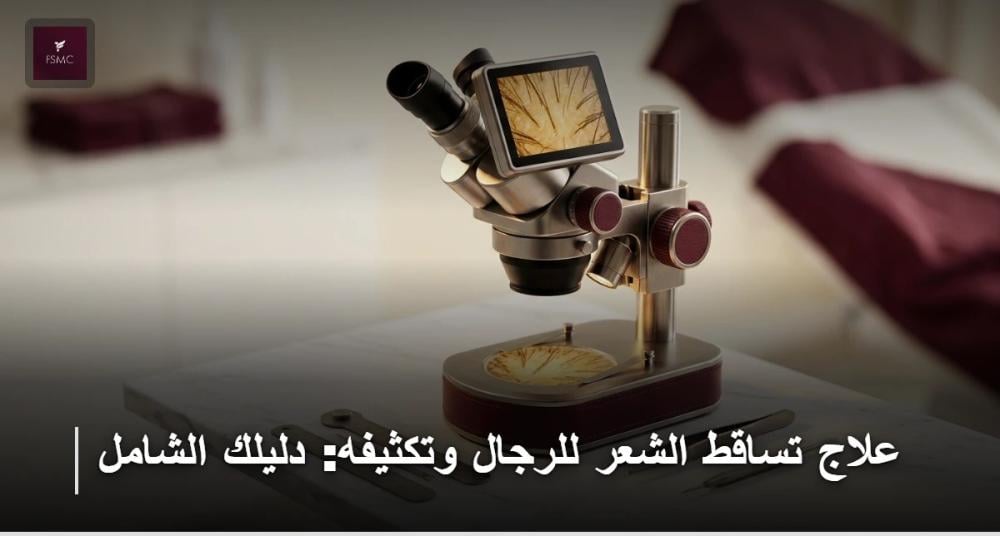
Accurate diagnosis is the point where a real doctor differs from a product salesman. In a dermatology clinic, it begins with a detailed examination of the scalp using a trichoscope, which accurately shows the condition of the follicles, hair density, and patterns of hair loss.
In addition, a comprehensive blood test can reveal underlying causes of hair loss in men, such as iron deficiency, low thyroid hormone levels, or high DHT levels. People often overlook the fact that the true cause of hair loss can be completely silent and only detected through laboratory testing.
After collecting this data, a complete medical file is created for the patient, identifying the type of hair loss—whether it is genetic, hormonal, nutritional, or related to psychological stress—and then a personalized treatment plan is developed. This is the crucial difference made by an accurate diagnosis from the outset.
Hair transplant techniques
When hair loss has resulted in noticeable bald patches that don't respond to medication, hair transplantation becomes the best solution at this stage. The techniques available today are more precise and less painful than many imagine.
- FUE (Follicular Unit Extraction) technique: Hair follicles are extracted individually from the back of the head and implanted into the empty areas without incisions.
- DHI (Direct Implantation) technique: The follicles are implanted immediately after extraction using a special pen that ensures an ideal angle and survival rate.
- Sapphire FUE Technology: An advanced version of FUE that uses sapphire instruments to reduce scarring and accelerate recovery.
- Beard and eyebrow transplantation: Applying the same FUE principle to other areas of the face for men who wish to do so.
- Robotic hair transplantation (ARTAS): Computer-aided identification of follicles suitable for transplantation and reduction of human error.
The results take from eight months to a year to appear fully, and patience here is a medical virtue, not an option.
How to prevent hair loss
Prevention begins before things get worse, and it's much easier than treatment. These everyday practices make a real difference:
- Avoid harsh shampoos rich in sulfates that dry out the scalp and weaken the follicles.
- Reduce direct heat on the hair such as hot air dryers and straightening tools.
- Follow a diet rich in protein, biotin, zinc, and iron.
- Effective stress management is crucial, as chronic stress is scientifically documented to accelerate hair loss.
- Massage your scalp daily for five minutes to stimulate blood circulation.
- Consult a doctor immediately if you notice a decrease in hair density — early intervention always gives better results.
- Avoid tying your hair too tightly, which causes what is known as "tractile hair loss".
What are the main causes of hair loss in men?
Understanding the causes of hair loss in men is the first step towards choosing a hair loss treatment that is precisely suited to each individual case. The most common causes are:
- Genetics and male pattern baldness (AGA) — the most common cause, and is related to the sensitivity of follicles to the hormone DHT.
- Iron deficiency and anemia reduce the oxygen supply to the hair follicles, which weakens the hair growth cycle.
- Thyroid disorders — both hyperthyroidism and hypothyroidism — cause noticeable hair loss.
- Acute psychological stress — converts the follicles into the early shedding stage known as Telogen Effluvium.
- Drug therapies — some blood pressure and cholesterol medications and antidepressants.
- Vitamin D, biotin and zinc deficiency — essential elements for hair structure and follicle strength.
- Skin diseases — such as psoriasis and seborrheic dermatitis that directly affect the scalp.
Read more about: The best laser hair removal center
What are the best medications for treating hair loss?
This is a question every man seeking a treatment for hair loss asks, and the answer depends entirely on his individual case. Studies have definitively proven the effectiveness of minoxidil and finasteride—both of which are specifically approved by international drug regulatory bodies for this purpose.
The doctor in the dermatology clinic decides which is more appropriate or whether combining them is necessary — some cases respond to one drug, and some require a dual protocol.
Minoxidil
- It is available in 2%, 5% and 10% concentrations for men, and the concentration is chosen according to the degree of hair loss.
- Its noticeable effect begins after three to four months of regular use.
- It stimulates the extension of the hair growth phase and the reduction of the natural shedding phase.
- Available in solution, foam, or medicated shampoo form, the latter being easier for daily application.
- Continued use is required — stopping will cause hair loss to return after months.
Finasteride
- It inhibits the 5-alpha reductase enzyme, which is responsible for converting testosterone into DHT.
- Studies show that it stops hair loss in 83% of cases and stimulates new growth in 66% of them.
- The standard dose is 1 mg daily, and at least six months are needed to assess the results.
- It is used exclusively by prescription due to its hormonal effect, and its use is prohibited without the supervision of a specialist.
- It has rare side effects related to sexual function that disappear in most cases upon discontinuation.
What are the best vitamins for treating hair loss?
Vitamins alone won't save hair loss caused by genetics or hormones—but they are an essential support. The most scientifically documented vitamins in this context are:
- Biotin (Vitamin B7): Enhances the structure of keratin, which is the main protein that makes up hair.
- Vitamin D: Its deficiency is directly linked to macular pattern hair loss and diffuse hair loss.
- Zinc: Supports cell proliferation in hair follicles and reduces inflammation.
- Iron: Its deficiency weakens the oxygen supply to the follicles and causes noticeable hair loss in men.
- Vitamin E: An antioxidant that protects hair follicles from damage caused by free radicals.
- Omega 3: Reduces inflammation in the scalp and enhances the elasticity of the blood vessel walls that nourish the hair follicles.
Doses of these vitamins vary from person to person — and laboratory tests accurately determine which ones are actually deficient in your body.
What is the treatment for hair loss in men and how can it thicken hair?
Hair loss and hair thickening treatment for men at the First Specialist Medical Clinics Complex involves a structured medical journey, beginning with a thorough consultation and culminating in visible and convincing results. No exaggerated promises—just a treatment protocol built on your individual assessment, not ready-made solutions.
Have you ever wondered why you've tried so many things without seeing results? The answer is often that you haven't addressed the root cause. Contact the First Specialist Medical Clinics Complex now and begin with a proper diagnosis that will open the right door for you.
Frequently asked questions about treating hair loss and thickening hair in men
Is it possible to stop hair loss permanently?
The answer depends on the cause. If hair loss is due to a nutritional deficiency or a temporary hormonal imbalance, then yes—it can be stopped after root canal treatment. Genetic baldness, however, cannot be stopped permanently but can be managed with ongoing medication or treated permanently with hair transplantation. The key is early diagnosis and proper treatment.
How long does it take for hair loss treatment results to appear?
Most drug treatments require three to six months before noticeable results appear. PRP injections provide relatively faster results, starting as early as the third month. Hair transplantation, on the other hand, requires eight months to a year for the final result to be fully achieved. Consistency and regularity are the two most influential factors in the quality of the final result.
Is hair transplantation safe and what are its results?
Hair transplantation using modern techniques such as FUE and DHI is a completely safe procedure when performed by a qualified doctor. It is the best solution for advanced hair loss, provided the patient is a suitable candidate based on the density of the donor area and the type of hair loss. The results are generally permanent because the transplanted follicles are genetically resistant to hair loss.
Hair loss is a real problem with real solutions—the only difference between those who regain their hair and those who continue to suffer is their decision to act in time. Treatments for hair loss and thickening in men should be based on sound medical principles, not on haphazard trials that waste time and money.
The First Specialist Medical Clinics Complex boasts a team of dermatology specialists ready to assess your condition and provide the most suitable treatment plan. Contact us today and book your consultation—one step towards restoring your hair and confidence.